
Analysts at Bank of America Merill Lynch said that fears of inflation getting "generalised" are overdone, as only two sub-categories of fuel and light and housing (accounting for 22 per cent of the basket) have seen a price-rise above the headline 5.2 per cent.

The growth in the contact-intensive portion of the economy trailed our expectation, highlighting how imperative it is for confidence to improve, either through accelerated vaccinations or otherwise, to drive a sustainable recovery in these sectors, asserts Aditi Nayar.

If imputed inflation for April and May is used, then you have inflation of over 6 per cent for two consecutive quarters, which is a worrying signal for the RBI.

Crisil Research expects retail inflation to rise 60 basis points to 4 per cent this fiscal from 3.4 per cent in 2018-19.

'To the believers of crypto regulations, I have only one question to ask, how will you regulate it?'

On one hand, Operation Greens should help to smoothen volatility in the prices of vegetables, whereas the proposal to enhance and extend minimum support prices to augment farmer incomes, may emerge as an inflation risk.

Deficits could come under more pressure in coming years as states implement their own Pay Commissions.
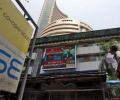
The stock markets, which had opened in the green on rate cut hopes, tumbled after the monetary policy announcement.

Fintech companies believe that the impact of Reserve Bank of India's order last week on unsecured loans will be visible in six to 12 months and prompt them to diversify and strengthen their secured portfolio. Fintechs which source funds through banks or non-banking finance companies (NBFCs) are looking at quickly building their secured portfolio options to at least 40 per cent of their total portfolio. "Over the medium to long term, as part of our product strategy, we are evaluating secured products which can be enabled over a digital platform" said Yogi Sadana, the founder of Zype, a lending-focussed fintech.

The recovery in the Indian services sector was sustained in November as new work orders supported business activity growth and the first rise in employment in nine months, a monthly survey said on Thursday.

In case the repo rate keeps trending downwards, borrowers can expect a downward revision of their MCLR-linked loans.
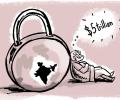
India decisively withstood global headwinds in 2023 and is likely to remain as the world's fastest-growing major economy on the back of growing demand, moderate inflation, stable interest rate regime and robust foreign exchange reserves. Despite widespread pessimism witnessed among the developed nations and the worsening geopolitical situation, India recorded a gross domestic product (GDP) expansion of 6.1 per cent in the March quarter. The growth moved up to 7.8 per cent in the June quarter and was 7.6 per cent in the September quarter. For the first six months of this fiscal, the growth was 7.7 per cent.

The Reserve Bank on Friday retained the GDP forecast for the current financial year at 9.5 per cent and flagged global semiconductor shortages, elevated commodity prices and potential global financial market volatility as downside risks to economic growth. In his address after the three-day meeting of the rate-setting panel, RBI Governor Shaktikanta Das said recovery in aggregate demand gathered pace in August-September, and it is reflected in high-frequency indicators, like railway freight traffic; port cargo; cement production; electricity demand; e-way bills; GST and toll collections. "The ebbing of infections, together with improving consumer confidence, has been supporting private consumption," he said, and added the pent-up demand and the festival season should give further fillip to urban demand in the second half of the financial year.

DBS called Rajan's decision not to seek an extension as a 'negative surprise'.
Growth impulses, while improving, remain fragile, and a rate hike will be disruptive to interest costs.

Both the indices closed at five-month highs, led by financial services, IT and metal stocks, amid persistent foreign fund inflows.

The main reason was that CPI inflation would likely remain below 4 per cent till July.

The Governor said the MPC had voted to maintain its accommodative stance, implying more rate cuts in the future if the need arises.

The banking sector in India is reeling under Rs 8 lakh crore of non performing assets (NPAs) or bad loans, of which PSU banks alone account for over Rs 6 lakh crore.
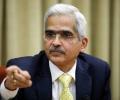
RBI governor Das flags growth slowdown, deputy raises alarm on inflation

Bond markets, global as well as domestic, are likely headed towards hard times over the next three to six months, as higher vegetable prices, rising fuel costs, and improved wages may keep inflation hot, believe analysts, who expect the yields to hit 7.5 per cent in the near-term from the current 7.234 per cent. In this backdrop, they suggest investors can put in money in funds/instruments with residual maturity of 4 to 6 years, while longer-term investors can allocate cautiously to the longer end in the range beyond 7 years.

Reversal in the declining economic growth trajectory is clearly the need of the hour and all steps should be taken to bring about this change.
The Reserve Bank may be hitting the end of its tolerance for high inflation and will most likely hike interest rates in the first half of 2022, analysts said on Friday. The central bank will also start rolling back its accommodative policies which have led to easy liquidity conditions, they said. The view from analysts came even as inflation cooled down to 5.6 per cent for July, after two months of breaching the upper end of the RBI's tolerance band of 6 per cent.

The central bank had revised its inflation forecast significantly downward in the last policy
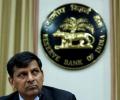
Here is some background on the candidates seen as potential successors to Rajan at the RBI

The Union government could target a fiscal deficit of 5.8-6 per cent of nominal GDP for 2023-24, and it should continue its capital expenditure push and look to simplify the personal income tax regime, economists recommended Finance Minister Nirmala Sitharaman and her team during their pre-Budget interaction on Monday. Starting last week, Sitharaman had eight pre-Budget consultations this time. More than 110 invitees representing seven stakeholder groups participated in these meetings, the finance ministry said in a statement. The stakeholder groups included representatives and experts from agriculture and agro-processing industry; industry, infrastructure & climate change; financial sector and capital markets; services and trade; social sector; trade unions and labour organisations; and economists.

Slowdown in industrial production notwithstanding, a marginal increase in inflation raised the clamour for another round of rate cut by the Reserve Bank on April 4 to boost economic activity.

The banking sector is set to move at a fast pace from hereon.

'If rate cuts happen, bond yields will come down and investors will make mark-to-market capital gains on them.'

Are we adopting an idea whose time has come and gone? My feeling is, yes, says ex-banker C Joseph Chacko in the fourth article of the series on inflation targeting.
The Reserve Bank of India is likely to cut policy rates by 0.25 per cent and keep the cash reserve ratio unchanged at its policy review next week, on the back of slower-than-expected growth and more encouraging inflation readings, says a report by HSBC.

They have also called for giving cash to the poor, so that demand is generated in the economy.
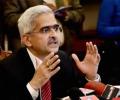
Reserve Bank Governor Shaktikanta Das has pitched for policy support from all sides -- fiscal, monetary and sectoral -- to nurture recovery of the economy hit by the second wave of the coronavirus pandemic. The dent on economic activity due to the second wave of the pandemic during April-May necessitated continuation of monetary measures to support the process of economic recovery to make it durable, Das had said while participating in the meeting of the Monetary Policy Committee (MPC) earlier in the month. "Overall, the second wave of COVID-19 has altered the near-term outlook, and policy support from all sides - fiscal, monetary and sectoral - is required to nurture recovery and expedite return to normalcy," Das said, as per the minutes of the meeting released on Friday.

The sector seems set for a rally that may be somewhat temporary.
There is a near consensus that at least a 25 basis points cut, if not 50, can be expected in the June policy.

Higher for longer' may be the narrative in the developed markets, but interest rates might not stay high for very long in India, with a section of the market expecting rate cuts to begin this year. The six-member Monetary Policy Committee of Reserve Bank of India (RBI) decided to keep interest rates unchanged at 6.5 per cent in the April review - after hiking the policy repo rate in six previous meetings. RBI Governor Shaktikanta Das emphasised that the pause was only for the April policy and that the central bank was ready to act if the situation demanded.

The finance ministry on Thursday raised concerns over the possible impact of El Nio conditions on India this year, saying if recent forecasts came true, the country could see lower agricultural output and higher inflation. "Some meteorological agencies predict the return of El Nio conditions in India this year. "If these predictions are accurate, then monsoon rains could be deficient, leading to lower agricultural output and higher prices," the ministry said in its monthly economic review.

Concerned over elevated inflation, Reserve Bank of India on Friday decided to leave the benchmark interest rate unchanged at 4 per cent but maintained an accommodative stance, implying more rate cuts in the future if need arises to support the economy hit by the Covid-19 pandemic.

The government's total liabilities rose to Rs 128.41 lakh crore in December quarter from Rs 125.71 lakh crore in the three months ended September 2021, according to the latest public debt management report. The increase reflects a quarter-on-quarter increase of 2.15 per cent in October-December 2021-22. In absolute terms, the total liabilities, including liabilities under the 'Public Account' of the government, jumped to Rs 1,28,41,996 crore at the end of December 2021.

RBI said at the current juncture, the all-out effort is to maintain and sustain, with the hope that when life is secure, resources, energy and time can be marshalled to rebuild and revive.
